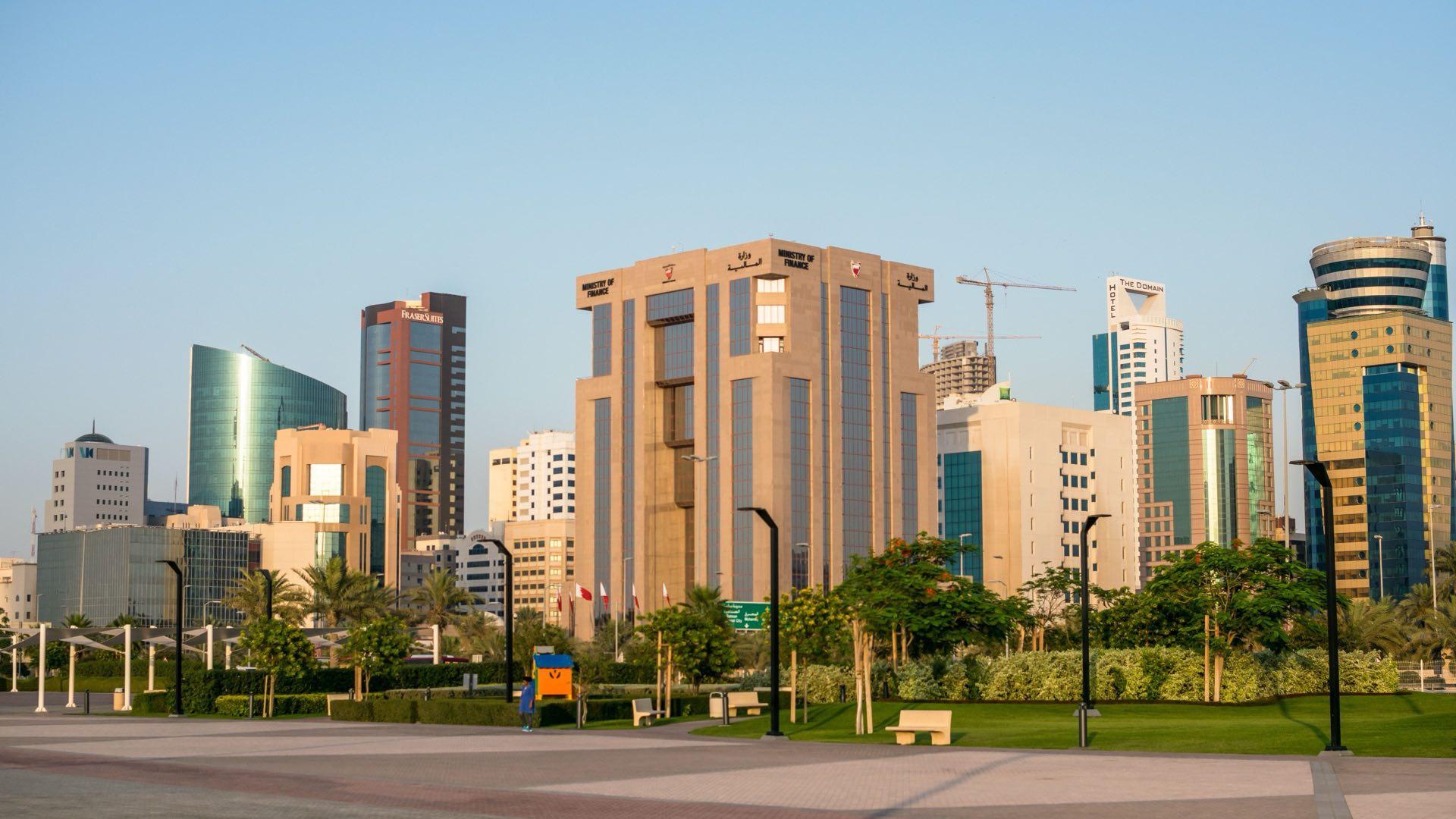
Bahrain Investor Guide

Navigate designated freehold zones, the SLRB registration fee, VAT-exempt real estate, and the path to 10-year Golden Residency

Updated May 20, 2026Intermediate14 min read

Rental yield
8.8%
Gross, indicative
Price growth
-2.0%
Year on year · Jun 2026
Transfer tax
1.7%
Currency
BHD
Population
1.68 million

Market Overview

Bahrain's economy is forecast to grow around 3.3% in 2026 (IMF Article IV / Ministry of Finance & National Economy), led by a diversifying non-oil sector -- financial services, manufacturing, logistics and tourism -- that the government targets to reach roughly 90% of GDP by 2030. Inflation is low (around 1% in late 2025). The Bahraini Dinar's long-standing 1 USD = 0.376 BHD peg removes currency risk for USD-denominated investors. The principal medium-term headwinds are fiscal: a sizeable budget deficit (around 11% of GDP in 2024), high government debt (around 134% of GDP in 2024 and rising in 2025), and an oil-price breakeven well above market levels, all of which keep austerity, VAT and subsidy-reform risk on the table. Note: the 3.3% forecast pre-dates regional disruption that emerged in mid-2026, so near-term growth should be treated as uncertain.

Country
Bahrain
Currency
BHD (pegged 1 USD = 0.376 BHD since 2001)
Population
1.68 million
GDP growth
3.3% (2026 IMF / MoFNE forecast; pre-dates mid-2026 regional disruption)
Inflation
~1.1% (late 2025; forecast below 2%)

Key industries

  • Financial Services & Islamic Banking
  • Oil Refining & Petrochemicals (Bapco)
  • Aluminium (Alba)
  • Tourism & Hospitality
  • Manufacturing
  • Logistics & Digital Economy

Restrictions

Foreign Freehold Ownership (Designated Zones)

Open

Non-Bahrainis (including non-GCC nationals) can own 100% freehold property -- land and building, in their own name, with no local partner or sponsor -- but only within government-designated freehold / investment zones. The framework is administered by the Survey & Land Registration Bureau (SLRB). Outside the designated zones, non-GCC nationals are generally limited to long-term leasehold or usufruct rights rather than freehold.

  • Freehold for non-Bahrainis is permitted only inside designated zones; commonly cited zones include Amwaj Islands, Marsa Al Seef (Seef), Bahrain Bay, Juffair, Reef Island, Durrat Al Bahrain, Diyar Al Muharraq, Dilmunia, Riffa Views, Marassi and Bilaj Al Jazayer (added 2025)
  • Confirm a specific property's zone status with the SLRB before committing -- the zone list has expanded over time and sources vary
  • GCC nationals enjoy broader ownership rights than non-GCC nationals
  • Every transfer must be registered with the SLRB, which issues the registered title deed
  • No local sponsor or nominee is required for freehold within designated zones
Off-Plan (RERA) Protections & AML / KYC

Open

Off-plan sales are regulated by the Real Estate Regulatory Authority (RERA) under Law No. 27 of 2017 and the Escrow Accounts Resolution No. 3 of 2018, which provide meaningful buyer protections. All transactions are also subject to standard bank-level Anti-Money-Laundering (AML) and Know-Your-Customer (KYC) checks on financing and fund transfers.

  • Off-plan projects must be registered with RERA before they can be marketed
  • Buyer funds go into a per-project escrow account managed by a CBB-authorised escrow agent, released to the developer only against verified construction milestones
  • A statutory cooling-off / consideration period (around 7 days) applies to off-plan purchases
  • Source-of-funds documentation and KYC apply to financed purchases and cross-border transfers
  • Engage a Bahraini lawyer for title and contract due diligence

Unlock the full guide. It's free.

You've read the preview. 8 more sections are open to Explorer members, instantly, with just an email.

No spam, no password, unsubscribe any time.

Already a member? Sign in

  • Taxes & Fees
  • Requirements
  • Purchase Steps
  • Property Types
  • Investment Drivers
  • Market Trends
  • Visa & Residency
  • Financing

Figures are indicative and subject to change. Regulations, taxes and market conditions vary by jurisdiction. Do your own due diligence and seek independent legal and financial advice.

Keep reading

All country guides